

18 Standout News Stories
January
Hide These Consulting Firms From My Sight

While a parliamentary inquiry targets American consulting firm McKinsey in Ottawa, it comes to light that in 2020, during the pandemic, thousands of dollars in contracts were awarded to that same firm for the government’s communications strategy, procurement, staffing in long-term care facilities, and assistance with major decision-making. Although the government admits it has no desire to know McKinsey’s other clients, the appearance of conflicts of interest is nonetheless troubling. While calling on external advisors is not unusual, what is being criticized above all is the devaluation of in-house expertise within the public administration and the exorbitant cost of the services.
February
A Controversial Appointment, Missteps, and Apologies

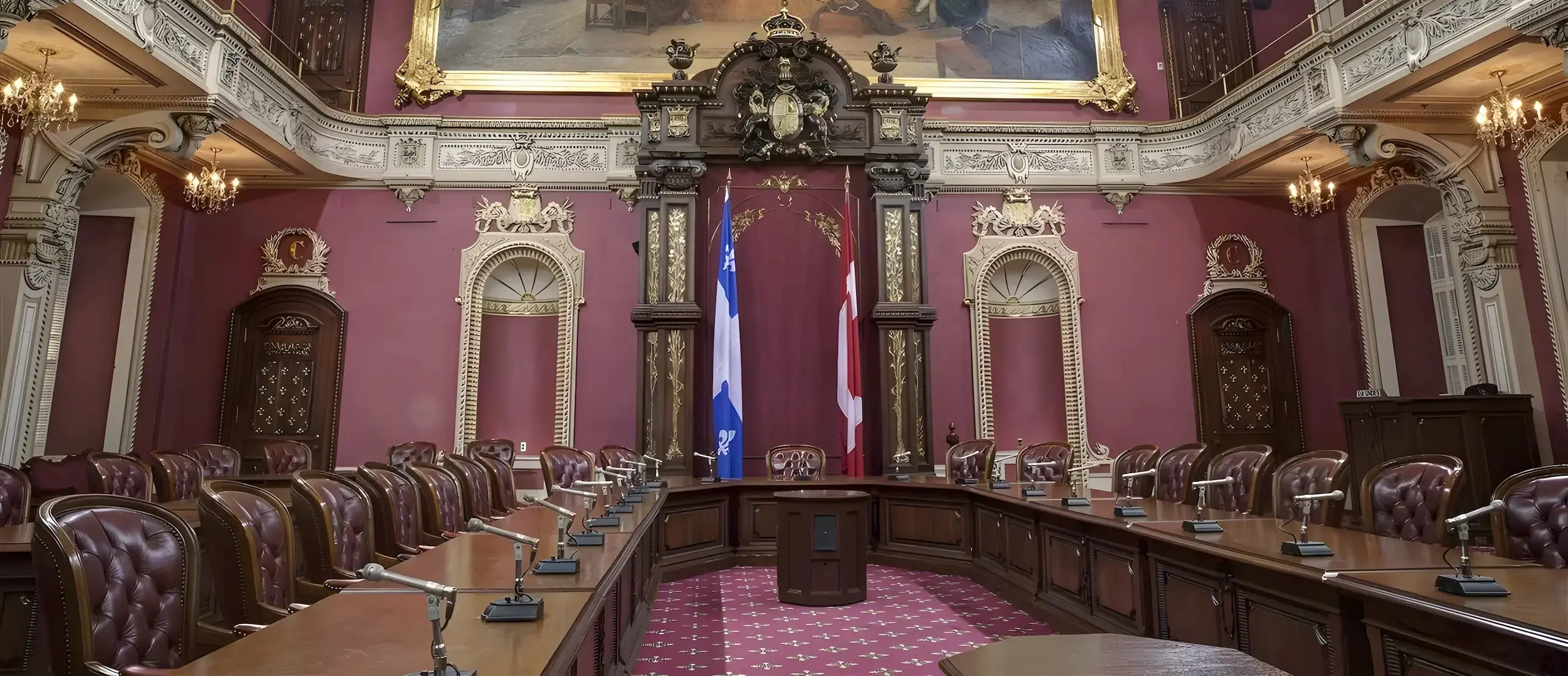
On February 24, the National Assembly voted, with the exception of Quebec solidaire, on a motion opposing the appointment of Amira Elghawaby as Canada’s Special Representative on Combating Islamophobia, citing controversial remarks she had made, notably about Bill 21. Meanwhile, a tweet by Liberal MNA Jennifer Maccarone supporting the appointment embarrassed her party to such a degree that she was forced to make a public apology. Justin Trudeau held firm, but came to the defence of Quebecers who are victims of Quebec bashing, all in an effort to avoid having to revisit the secularism law episode.
March
The Final Delay for Junior Kindergarten?

In 2018, François Legault declared loudly that he was putting his seat on the line over one issue: junior kindergarten. If he did not create 2,600 spaces, he would step down. The pandemic, the labour shortage, and construction delays causing a lack of classroom space in schools all contributed to the promise being pushed back by four years, and unsurprisingly, the Premier is still in office.
March
SAAQ: The Winding Detours of a Failed Tech Transition
The Societe de l’assurance automobile du Quebec had a plan. Everything was supposed to go smoothly in this transition toward improved service management built around a major digital shift. Instead, what unfolded were massive lineups, frustrated users, and embarrassed employees. A crisis takes time to resolve, so the attempted rollout of facial recognition technology a few months later did not benefit from good momentum.
March
Quebec Budget: A telegraphed Tax Cut

A promise kept: Finance Minister Eric Girard proceeded with a tax cut as part of his fifth budget since joining the government, which otherwise generated little controversy. This decision, criticized by numerous public policy experts and civil society groups, is seen as a mistake that, over the long term, risks limiting the Quebec government’s capacity to act within its spheres of intervention.
March
Better Regulating Child Labour

The entry of very young teenagers into the workforce is far from going unnoticed. A visit to your favourite fast-food chain is enough to confirm it. With this motivated but inexperienced workforce, however, comes an increased risk of workplace accidents or abuse, as reflected in CNESST statistics. That is why Labour Minister Jean Boulet decided to legislate on the matter by tabling Bill 14, the Act respecting the regulation of child labour. The bill was passed without significant amendments and unanimously, in time for the summer season.
March
Roxham Road: The End of a Long Journey

A rallying cause for the Parti Québécois last fall, the party of François Legault picked up the torch at the start of the year by calling for the closure of Roxham Road. In 2022, nearly 40,000 people used Roxham Road out of more than 92,000 asylum seekers in Canada. The parties were calling for a renegotiation of the Safe Third Country Agreement between Canada and the United States, questioning in particular Quebec’s capacity to absorb new arrivals. Joe Biden’s visit accelerated matters, and on March 24 the two countries reached an agreement, with Justin Trudeau announcing the closure within just 24 hours. While applauded by some, the closure drew criticism, notably because a significant number of refugees are still attempting to cross via Roxham Road or sometimes even more dangerous routes.
March
More Than 1,000 Articles to Reform the Mammoth

Tabled on March 29 and with the public consultation phase already complete, Bill 15, An Act to make the health and social services system more efficient, was not passed this session, despite the intention initially expressed by Christian Dube. Yet another reform, announced during the election campaign and championed by an ambitious minister, sparked significant mobilization from civil society, opposition parties, and stakeholders working across all critical sectors of health care. Following Jean Rochon’s shift to ambulatory care in 1995, Gaetan Barrette’s 2015 reform, and drawing heavily on the Clair Report published in 2001, the minister wants to « shake the pillars of the temple. » Expectations are enormous, but never before has society been so determined to see the mammoth finally tamed.
April
A Fund and Royalties to Protect Our Blue Gold

With his Bill 20, Environment Minister Benoit Charette proposes to increase by 900% the revenues from water royalties collected by the government. This development, welcomed by the environmental community, is long overdue: the regulation in question had not been amended since 2010. It should be noted that Quebec received only three million dollars for the 811 billion litres of water drawn from its territory in 2021. The bill also gives concrete form to an announcement made in the last budget: the creation of the Blue Fund, with an initial envelope of 500 million dollars over five years. It is, however, still under detailed study at the time of writing.
April
How to Remove the Thorn of Private Agencies Without Getting Hurt

Health Minister Christian Dube is no stranger to major undertakings with his mega-reform project for the network. On April 18, unanimously and without fanfare, the MNAs passed Bill 10 in favour of limiting the use of private staffing agencies and banning them outright starting in December 2024 in major urban centres, and one year later in other regions. It is no coincidence that the minister is working to remove this thorn from the network’s side while public sector collective agreements are being negotiated. His ultimate goal: to bring staff back into the public network, which will be no small feat.
April
<span><i>U-Turn on the Highway Portion of the Third Link</i></span>

The CAQ government surprised more than a few people with its decision to abandon the highway portion of its Quebec-Levis tunnel project, starting with its own caucus. Claiming to base the decision on the latest data compiled by the ministry, Transport Minister Genevieve Guilbault was nonetheless contradicted on the figures in the days that followed. The opposition parties, for their part, seized the opportunity to question the CAQ’s true motivations. Eric Duhaime was first among them, also taking advantage of minister Eric Caire’s precarious position to circulate a petition demanding his resignation.
May
A Contentious Pay Raise

A pay raise for MNAs is like Groundhog Day: no matter when it is proposed, there is never a « good time. » While the Liberals quickly chose to support the government, Quebec solidaire and, to a lesser extent, the Parti Quebecois sharply criticized this increase decided by and for elected officials. Quebec solidaire’s desire to stand out in this debate is notable, denouncing the self-attribution of a $30,000 raise starting this year. Co-spokesperson Gabriel Nadeau-Dubois, while wishing to lead by example, did not require the members of his caucus to give their raise back to the community. The CAQ moved forward despite the irritants: bill passed!
May
1995 No Camp Spending: Unanimous Motion at the National Assembly

Almost 28 years after the 1995 referendum, the National Assembly called, through a unanimous motion, to lift the veil on documents sealed « forever » detailing the expenses incurred at the time by the No camp. The Parti Quebecois’s Wednesday motion instantly reignited the debate in the news cycle. The willingness of all elected officials to shed light on such a pivotal moment in Quebec history is worth noting. The DGEQ does not appear to be complying with the request, and this is likely not the last we will hear of it!
May
Economic Immigration: 100% Francophone

During the election campaign, the CAQ sought to make language a central issue in immigration, declaring that increasing thresholds would be « somewhat suicidal. » A few months later, the government announced it was aiming for 100% francophone economic immigration. In May, it announced a target date of 2026 and, against all expectations, that it was also considering raising thresholds from 50,000 to 60,000 permanent immigrants per year. To cap it off, the PEQ reform that had caused an uproar during its first mandate was scrapped: the government ultimately chose to ease its criteria.
May
Promising Pilot Projects for Home Hospitalization

Eight pilot projects will launch in Montreal and Quebec City next year. An initiative highlighted notably by the Federation of Medical Specialists, it will not only help ease the pressure on emergency rooms, but will also allow eligible patients to receive the care they need in the comfort of their own homes, under constant but remote monitoring. A concrete example of how medicine is evolving thanks to new technologies.
To Watch in the Next Parliamentary Session
A slight dip in the polls after a more difficult start to the mandate than the last, marked by the abandonment of the highway portion of the third link, reflects a few dents beginning to appear in the Coalition Avenir Quebec’s armour. That said, there is a clear willingness on the part of the Legault government to push forward major reforms, in a context where its popularity nonetheless remains high. The last parliamentary session was the stage for debates that have been going on for years: MNA salaries, health care reform, the structure of the education system, immigration thresholds, and the protection of French. It remains to be seen whether the Premier drew too heavily on his reserves of political courage, or simply chose to put the more contentious issues behind him quickly, given that voters’ memories tend to be short.
From an economic standpoint, the recession anticipated in January will in all likelihood not have materialized, but it is worth noting that inflation was still at 4.4% last April. The Bank of Canada chose to raise its key interest rate again, this time to 4.75%, and is struggling to keep up with its own forecasts. The cost of credit continues to rise, which will inevitably affect consumer behaviour, particularly that of the middle class.
The next parliamentary session promises to be equally eventful, with the continued study of several key bills. These include Bill 15 on the efficiency of the health and social services system, Bill 22 on municipal expropriation powers, Bill 23 on school governance, and Bill 29 on planned obsolescence and repairability. Others are expected along the way, including a bill on energy efficiency.
Stay tuned this fall!
To all of you, passionate about politics, have a great summer!