

Federal Economic Update 2024
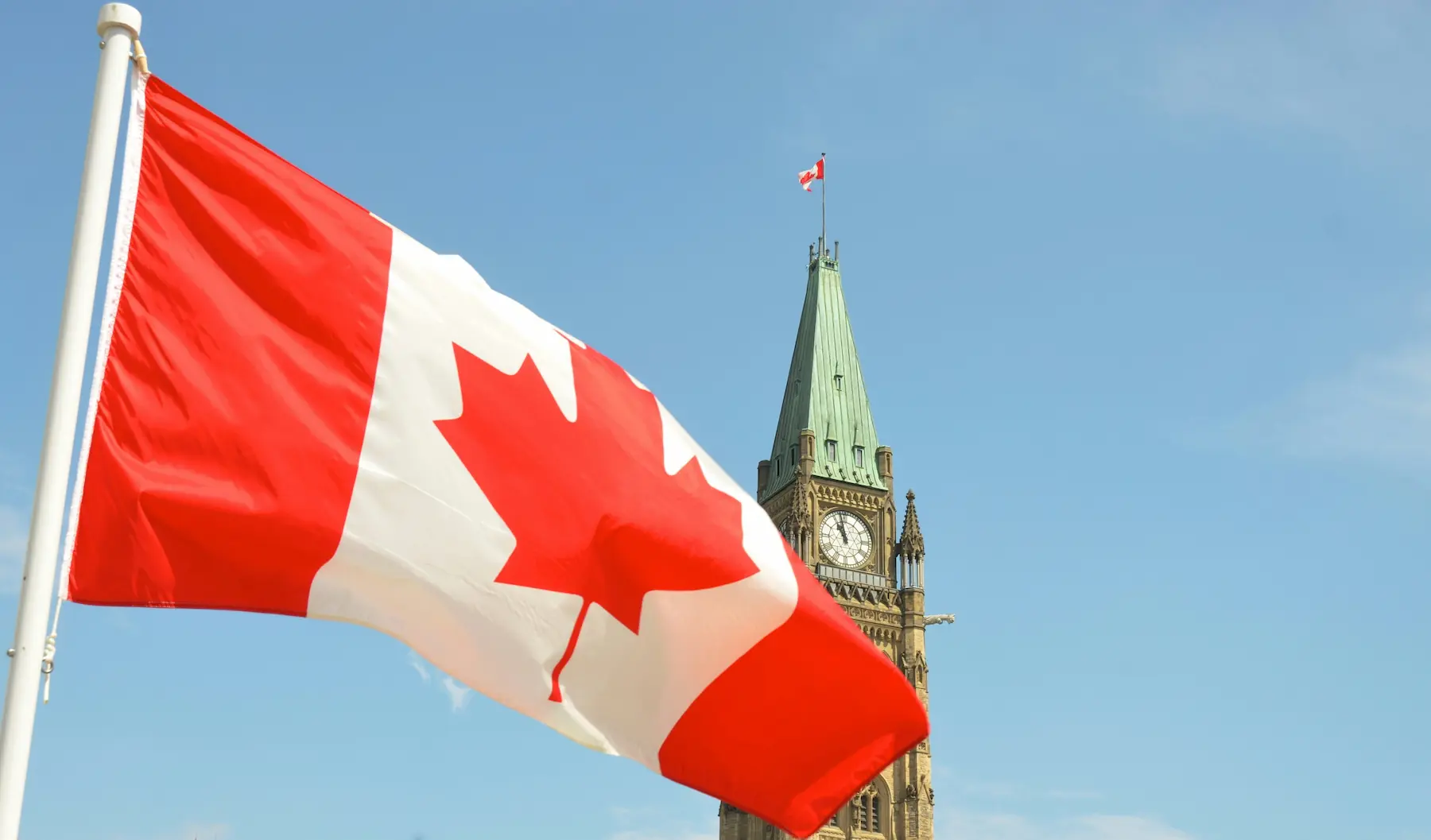
It was a day marked by unexpected developments when the federal government unveiled the 2024 fall economic update, the last of the current mandate.
With the unforeseen departure of Ms. Chrystia Freeland as Minister of Finance and the appointment of Mr. Dominic Leblanc to that position, adding to his responsibilities as Minister of Public Safety, Democratic Institutions and Intergovernmental Affairs, the deficit now stands at $61.9B.
Discover the highlights prepared by our team of specialists.
Taxation
$1.6B for a tax holiday for all Canadians
- The legislation provides for a two-month goods and services tax/harmonized sales tax (GST/HST) holiday on essential holiday products such as groceries, restaurant meals, certain beverages, snacks, children’s clothing, and certain gift items.
- The holiday will be in effect from December 14, 2024 to February 15, 2025.
Combatting tax evasion
- $451.5M over 5 years starting in 2025-2026. This amount will allow the CRA to take additional measures to complete audits of emergency business subsidies and address key gaps in tax compliance.
A bill to support workers in the personal care services sector
- A new refundable tax credit for personal care service attendants, possibly modelled on the one offered to volunteer firefighters.
Excluding the Canada Disability Benefit from income tax calculations
- Legislation to ensure that the Canada Disability Benefit is excluded from income calculations under the Income Tax Act.
Reducing credit card fees for small businesses
- Legislation to require payment processing companies to pass on the full savings from credit card transaction fees to small businesses.
Increasing the risk appetite of federally mandated financial Crown corporations
- Amending the Farm Credit Canada Act.
Finances
A $61.9B deficit
- The deficit is projected to reach $48.3B, or 1.6% of GDP, in 2024-2025. In total, the budgetary balance before policy measures will be $61.9B for 2023-2024.
Further reducing red tape
- $27.8M over 5 years for a new administrative burden reduction office starting in 2025-2026.
- Elimination of provincial and territorial cannabis excise stamps and replacement with a single national stamp. This would allow licensed cannabis producers to more easily open new business opportunities in other provinces.
Modernizing service delivery
- $64.7M over 6 years to Employment and Social Development Canada, starting in 2024-2025, to complete the migration of Old Age Security to a secure and user-friendly platform.
Penalizing abusive practices in the financial restructuring sector
- Adding civil remedies, including restitution, for non-compliance with certain provisions of the Bankruptcy and Insolvency Act, and raising the maximum criminal fine for non-compliance with certain provisions of that Act from $5,000 to $100,000 for individuals and to $1M for corporations.
Implementing consumer-driven banking services
- A bill addressing the remaining elements of the Canadian Consumer-Driven Banking Framework.
- Launching the Canadian Consumer-Driven Banking Framework in early 2026. In addition to providing FCAC with $44.3M over 3 years, starting in 2025-2026.
Cracking down on predatory lending
- Prohibition on the sale of credit insurance tied to a payday loan with a minimum term of 42 days for payday loan agreements. The government will give the industry 12 months to comply with the new conditions.
Producing a $5 bill featuring Terry Fox
- The government announces that Terry Fox will appear on the next $5 bill. Sir Wilfrid Laurier, whose portrait previously appeared on these bills, will now appear on $50 bills.
Economy
Organizing the Invest in Canada Summit
- The Invest in Canada Summit will be organized in spring 2025. The summit will showcase Canada’s competitive advantages.
Extending the Accelerated Investment Incentive
- The accelerated investment incentive will be reinstated along with immediate expensing of manufacturing or processing machinery and equipment, clean energy generation or energy conservation equipment, and zero-emission vehicles.
Boosting pension fund investments in Canada
- Eliminating the 30% rule for investments in Canadian entities. This will make it simpler for Canadian pension funds to make significant investments in Canadian entities.
Attracting investments in high-growth companies
- $1B to launch a 4th round of funding for the Venture Capital Catalyst Initiative, on a cash basis, in 2025-2026.
Boosting AI infrastructure development
- $15B in loans and equity investments for AI data centre projects that benefit from investments by one or more Canadian pension funds.
Allowing the rollover deferral of capital gains from business investments
- Amending the Income Tax Act to broaden the definition of qualified small business corporation shares and ease certain conditions required to qualify for the deferral.
Reducing internal trade barriers
- Publishing a list of specific restrictive measures in each province and territory that harm internal trade.
- Tying major federal transfers to provinces and territories to conditions regarding the elimination of internal trade barriers and labour mobility will be considered.
- The Canadian Free Trade Agreement will be reviewed by the Minister of Public Safety to ensure it continues to serve Canada’s national economic interests.
- $4.3M over 3 years, starting in 2025-2026, to the Canadian Food Inspection Agency to advance mutual recognition in the agriculture and agri-food sector.
Innovation
$174M to preserve Canada’s artificial intelligence advantage
- $150M over 3 years to global innovation clusters.
- $24M over 2 years starting in 2025 to the National AI Institutes to support the continued commercialization of AI.
Boosting scientific research and experimental development
- $1.9B over 6 years to modernize the SR&ED program
- Raising the annual expenditure cap for Canadian-controlled private corporations by 35%, increasing the limit from $3M to $4.5M.
- Increasing the range of the prior year’s taxable capital phase-down to raise the lower limit from $10M to $15M and the upper limit from $50M to $75M respectively.
- Expanding the enhanced refundable investment tax credit under the SR&ED program to Canadian public corporations.
- Making capital expenditures eligible again as an income deduction and for the purposes of the SR&ED investment tax credit, for acquired property.
- Creating a patent box regime.
Accelerating the digital transformation of small and medium-sized businesses
- $500M over 4 years to the Business Development Bank of Canada, starting in 2025-2026, on a cash basis.
AI in the public service
- A strategic review covering all its activities and programs will be launched. This review will be conducted by the AI Secretariat and results will be announced in the 2025 budget.
Advancing innovation through government procurement
- Tabling the Procurement for Innovation and Small Business Act, which would require federal government departments and agencies to purchase at least 20% of goods and services from Canadian small and medium-sized businesses.
- Establishing a small business innovation program to help federal departments and agencies meet the new targets.
Labour and Immigration
Recognizing foreign credentials
- New measures to strengthen the agility and resilience of the labour market to support the integration of newly arrived workers into their chosen profession by removing the tax exemption for professional orders that do not accelerate credential recognition and publishing a national performance framework for credential recognition.
- A standard-setting framework similar to the Red Seal program will be established to ensure labour mobility in the healthcare sector across the country.
Protecting workers from wage theft
- Regulatory changes to significantly increase the penalties imposed on federally regulated employers who commit wage theft.
- The government will hold consultations on proposed changes to penalty amounts.
Protecting workers from non-compete clauses
- Significantly limiting the use of non-compete clauses to protect workers’ rights, promote labour mobility, increase competition, stimulate innovation and increase productivity.
- The government will launch consultations on the proposed legislative changes to apply them in early 2025.
Protecting copyright in the arts and creative sector
- Amending the Copyright Act to establish an artist’s resale right in Canada so that members of the Canadian visual arts community benefit from future sales of their works.
International Trade and Global Affairs
Imposing more surtaxes to combat China’s unfair trade practices
- Imposing additional tariffs on imports of certain solar energy products and critical minerals from China over the next year.
- Imposing tariffs on semiconductors, permanent magnets and natural graphite from China, starting in 2026.
Limiting trade with countries that harm Canada
- Amending the Export and Import Permits Act to allow the government to restrict the import or export of goods in response to measures taken by another country that harm Canada, or to create safer and more reliable supply chains.
Applying the principle of reciprocity in trade partnerships
- Reciprocity will be a requirement for all federal spending and policies.
- This approach will apply to various new measures including public procurement, infrastructure spending at the subnational level, tax investment incentives, subsidies and contributions, technical barriers to trade, sanitary and phytosanitary measures, investment restrictions and intellectual property requirements.
Applying the principle of reciprocity in federal procurement
- Access to Canada’s federal public procurement reserved for Canadians and trade partners that offer Canada reciprocal access, starting spring 2025.
- Imposing domestic content requirements on the participation of foreign suppliers in federally funded infrastructure projects and creating a program prioritizing contracts with small Canadian businesses and innovators in the country.
Strengthening Canada’s position as a global nuclear leader
- Guaranteeing enriched nuclear fuel purchase contracts worth a maximum of $500M. These purchases will be made from the United States or other allied countries, including purchases of high-assay low-enriched uranium, subject to further industry consultations on the terms of this program.
- $4M over 10 years to Natural Resources Canada, starting in 2024-2025, for program management.
Eliminating forced labour from Canadian supply chains
- $25.1M over 2 years, starting in 2025-2026, to Global Affairs Canada and the Canada Border Services Agency to:
- Pass legislation establishing a due diligence framework for supply chains, requiring government entities and companies to examine their international supply chains, assess risks of fundamental labour rights violations and take steps to eliminate them. A new oversight body will be established to ensure compliance with this legislation.
- Making legislative changes to strengthen Canada’s prohibition on importing goods produced with forced labour, including tightening the obligation of importers to prove their supply chains are free of forced labour.
Public Safety and Borders
Protecting the Canadian border
- $1.3B directed to Public Safety Canada, the Canada Border Services Agency, the Communications Security Establishment and the Royal Canadian Mounted Police.
Toughening bail and sentencing laws
- Amending the Criminal Code to toughen bail and sentencing laws to more effectively address the seriousness of car thefts, break-and-enter offences, extortion and arson committed by repeat, violent or organized crime offenders.
Continuing the fight against car theft
- Amending the Customs Act to grant the CBSA new powers to inspect goods destined for export.
- These amendments will include requiring warehouse operators and shippers to provide CBSA officers with adequate facilities.
Increasing the sharing of information from sex offender registries
- Amendments to the Sex Offender Information Registration Act aimed at strengthening the RCMP’s ability to share information collected under the Act with partners at home and abroad.
Removing assault-style firearms from circulation
- $597.9M over 3 years, starting in 2024-2025, to Public Safety Canada and the Royal Canadian Mounted Police to safely remove prohibited firearms from communities and fairly compensate owners of assault-style firearms.
Cracking down on money laundering and terrorist financing
- Adopting legislative and regulatory measures to strengthen Canada’s AML-CTF framework and be in a strong position ahead of the FATF mutual evaluation in 2025-2026.
- Establishing a task force to facilitate the sharing and analysis of intelligence on sophisticated money laundering schemes, including those linked to fentanyl trafficking.
- Establishing interministerial dialogue with non-profit organizations to better combat the risks of money laundering, terrorist financing and sanctions evasion by raising awareness of these risks and improving communication on them.
Imposing harsher penalties for financial crimes
- Legislative and regulatory amendments aimed at strengthening compliance and increasing administrative monetary penalties (AMPs).
- Amending the PCMLTFA and the Office of the Superintendent of Financial Institutions Act so that FINTRAC becomes a member of the Financial Institutions Supervisory Committee.
Rebuilding Ukraine using immobilized Russian assets
- Amendments to the Special Economic Measures Act to allow it to collect a targeted levy on exceptional profits from blocked assets held in Canada.
Housing
Doubling the loan limit of the Canadian Secondary Suite Loan Program
- Increasing the loan limit of the Canadian Secondary Suite Loan Program to $80,000.
- This program will be administered by the Canada Mortgage and Housing Corporation and will offer 15-year loans at a low interest rate of just 2%.
- The launch of the Canadian Secondary Suite Loan Program is planned for early 2025.
- Accelerating the delivery of $2B in low-cost financing so that 4,000 homes can be built more quickly.
$6B for provinces and territories from the Canada Housing Infrastructure Fund
- In collaboration with provincial, territorial and municipal partners, the government is providing funds under the $5B provincial and territorial stream and the $1B municipal stream.
Building up to four units at a time
- The government is working with the Canada Mortgage and Housing Corporation to explore opportunities to use mortgage insurance to support the construction of a greater number of 2-to-4-unit buildings.
- $50M over 2 years for affordable housing providers through the Affordable Housing Fund for their preparatory work.
Increasing affordable housing funding
- $50M for rapid housing creation from the Affordable Housing Fund in 2025-2026 to build more shelter spaces for women.
Supporting people living in non-profit housing and housing cooperatives
- $362.7M starting in 2028-2029 to extend the Federal Community Housing Initiative.
Eliminating the stress test at mortgage renewal
- Consultations on ways to improve the structure and effectiveness of the mortgage interest rate stress test for insured mortgages.
- Amending mortgage insurance rules to eliminate the stress test for all uninsured mortgage holders switching from one federally regulated lender to another that takes out portfolio insurance.
Reviewing long-term fixed-rate mortgages
- Beginning consultations on the development of the long-term mortgage market in Canada.
Offering interest-free $40,000 loans for energy-efficient renovations
- $600M in additional interest-free loans through the Canada Greener Homes Loan Program to reduce energy costs and help Canada achieve its net-zero target by 2050.
- This investment will cost $174.4M over 6 years, starting in 2024-2025.
Combatting mortgage fraud
- Broadening CRA discussions with the broader financial sector, including mortgage lenders, on the best way to design and implement a new mortgage fraud prevention tool.
- The CRA plans to begin implementing this measure in early 2025.
Environment
Making the rural supplement of the Canada Carbon Rebate more generous
- Amending the Income Tax Act so that more people across the country receive the rural supplement of the Canada Carbon Rebate starting in April 2025.
Making provincial and territorial Crown corporations eligible for the Clean Electricity Investment Tax Credit
- The investment tax credit will be accessible to provinces if they commit to publishing by end of 2026 an energy roadmap to achieve net-zero by 2050 that includes all energy sources.
Introducing the Electric Vehicle Supply Chain Investment Tax Credit
- A 10% refundable tax credit applicable to eligible buildings in three segments of the EV supply chain.
- To qualify for the tax credit, a corporation would need to acquire $100M of eligible property under the clean technology manufacturing investment tax credit in each of the three segments.
Producing clean hydrogen through methane pyrolysis
- $43.5M over 5 years, starting in 2025-2026, to expand the clean hydrogen investment tax credit to include hydrogen production through methane pyrolysis among the eligible production pathways.
Converting the Belledune power plant to biomass
- Supporting the Government of New Brunswick and NB Power in moving forward with the proposed conversion of the coal-fired Belledune power plant to a biomass-fuelled facility.
Requiring climate-related financial disclosures
- Amending the Canada Business Corporations Act to impose this disclosure obligation on large private corporations incorporated under federal law.
Transportation
Maintaining the rail link serving northern Manitoba
- $43.8M over 2 years, starting in 2025-2026, to Transport Canada to ensure the operation and maintenance of the Hudson Bay Railway under the Passenger Rail Service Contributions Program.
Improving public transit in the National Capital Region
- $31.6M over 3 years, starting in 2025-2026, for feasibility studies for the federal and Ontario portions of the 2 km Gatineau-Ottawa light rail project.
- Commitment to an additional multimodal bridge crossing the Ottawa River to improve transportation connectivity in the National Capital Region.
Building the Arctic Bay port in Nunavut
- $105.9M over 7 years on a cash basis, starting in 2025-2026, and $4.1M per year thereafter to Fisheries and Oceans Canada for the construction of a small craft harbour at Arctic Bay (Nunavut).
Family
Helping secondary school students access opportunities in science, technology, engineering and mathematics
- $3M over 5 years to Shad Canada to support the organization’s programs to increase students’ interest in STEM and innovation.
- $600,000 per year thereafter to Shad Canada to support the programs and activities of this organization to help more secondary school students develop a passion for STEM and innovation.
Training the next generation of innovators
- $29.2M over 3 years to help Canada’s Innovation Talent Initiative launch a pilot project aimed at creating an exceptional research and development workforce in Canada.
Women’s Conditions and Rights Advocacy
Protecting women’s reproductive health rights
- $90M over 6 years to Health Canada to expand and make permanent the Sexual and Reproductive Health Fund.
- $20M per year to Health Canada to expand and make permanent the Sexual and Reproductive Health Fund.
- $7.5M over four years, starting in 2025-2026, to Statistics Canada to conduct new surveys on sexual and reproductive health and rights.
Supporting rights advocacy organizations
- $15M to the Department for Women and Gender Equality for the Women’s Program. This funding will help build the capacity of women’s rights organizations to advance projects aimed at ending gender-based violence and helping more women and girls to live healthy, safe and prosperous lives.
Establishing the Canadian Black Justice Strategy
- $77.9M over 2 years to launch the Canadian Black Justice Strategy.
- $23.6M over 2 years to the Department of Justice to support the provision of paralegal assistance services specifically for Black individuals.
- $18.2M over 2 years to the Royal Canadian Mounted Police. This amount will be directed to the Anti-Racism Policy Group and evidence-based improvements.
- $16.7M over 2 years to Public Safety Canada to help Black community organizations provide community reintegration and correctional services programs.
- $7.9M over 2 years to Correctional Service Canada, starting in 2025-2026, for its Black Offender Strategy, which enables culturally appropriate rehabilitation during incarceration.
- $8.8M over 2 years to Health Canada to expand the offering of culturally adapted psychological support and addiction programs for Black individuals.
- $1M over 2 years to Statistics Canada to address key data gaps to enable a better understanding of disparities affecting Black people in Canada.
- $1.8M over 2 years to the Canada School of Public Service to foster culture change within the public service.
Strengthening the Black Entrepreneurship Program
- $189M over 5 years for Innovation, Science and Economic Development Canada. This amount will be directed to the Black Entrepreneurship Program to help Black business people and business owners succeed.
- $9.5M over 2 years to Employment and Social Development Canada to help Black youth overcome barriers to employment through the Youth Employment and Skills Strategy Program.
Supporting Black community organizations
- $36M in 2025-2026 to Employment and Social Development Canada for the Supporting Black Canadian Communities Initiative.
Press Review
Economic statement: a deficit nearly $22 billion higher than expected
Radio-Canada
Chrystia Freeland leaves a larger-than-expected deficit
Le Devoir
The deficit surges as political uncertainty intensifies
La Presse
LIVE | Economic update: more deficits as far as the eye can see in Ottawa
Journal de Quebec