

Looking Back on a Turbulent Political Fall
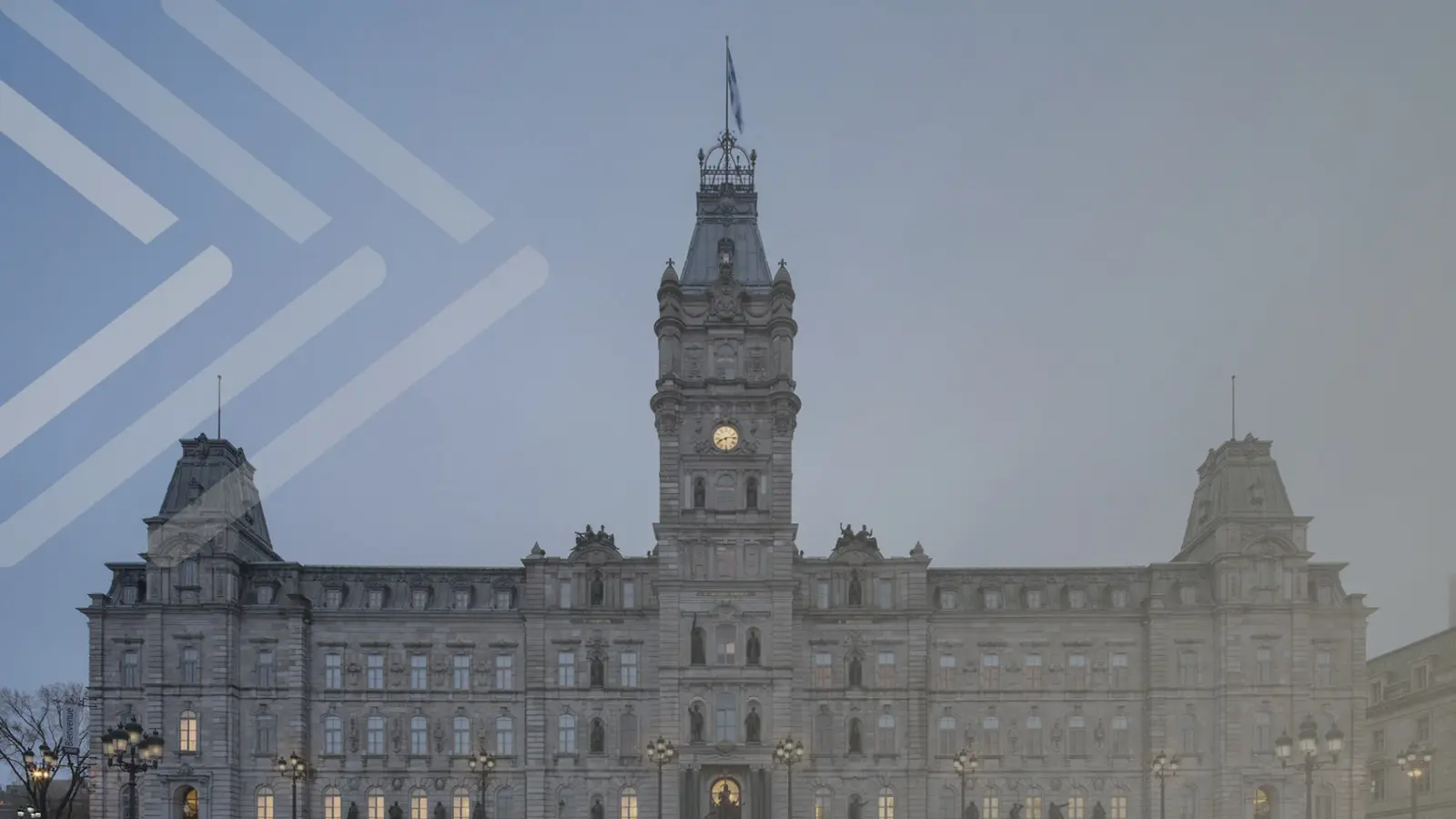
With less than a year to go before the next general election, Quebec’s political landscape is going through an unprecedented period of transformation. Between economic uncertainty and a simmering social climate, the cards are being reshuffled. One thing is certain: nothing is decided yet.
A Political Environment Under High Pressure
The parliamentary session was marked by negotiations, bills, and a recentring of priorities that did not achieve consensus.
Our American neighbour, with its own political shifts, has exerted an undeniable influence on Quebec and Canadian public debate. With the economy and major projects at the heart of priorities, public finances remain under pressure. An aging population is forcing difficult choices, while governments must juggle high citizen expectations and reduced fiscal room for manoeuvre. The pursuit of government efficiency and tight management of ministerial budgets are creating consequences in the regions, causing dissatisfaction and uncertainty. All of these elements could become decisive factors during an election period.
Are we at the end of a political cycle? Some are hoping so, while others are looking to earn the trust of voters once again.
A Closer Look at the Political Game in Quebec City
The latest polls reveal a situation where the four main parties find themselves in a position where everything can still shift. Recent news has proven exactly that.
The Parti québécois: A Favourable Position
The PQ will need to work to maintain its lead in the polls. Its activist base is mobilizing, and the CAQ’s fatigue after two mandates offers them a favourable stance. However, the question of sovereignty remains a delicate issue that is not resonating with a growing share of voters.
Its positioning focused on nationalism and identity is clear, while strategically sidelining the sovereignty question through its Livre bleu. The objective: to claim the political space representing change.
The coming year is likely to be shaped by relations with the United States and the renegotiation of our trade agreement. Is this a favourable context for talking about independence when key sectors of our economy are under intense pressure, particularly in Quebec’s regions? The coming months will tell.
The Quebec Liberal Party: In Search of an Identity
After a lengthy leadership race, the PLQ thought it could take from the PQ the title of government-in-waiting with a renewed vision. One must admit that the crisis that pushed Pablo Rodriguez out the door dampened the enthusiasm of many. Amid all the turmoil, it was Marwah Rizqy who managed to protect her reputation.
Who will take her place with less than a year before the general election? Many questions remain unanswered, and the challenge of reconnecting with the regions and francophones awaits whoever succeeds her. Liberal activists are hoping to benefit from the surprise effect of a new leader who has not yet been defined by their opponents. Freshness often carries success when a political cycle comes to an end.
The Coalition Avenir Québec: Wearing Out in Power?
The CAQ is experiencing the fate generally reserved for outgoing governments after several consecutive mandates. The leader persists: he will be at the starting line in 2026. This is a risk for the Premier, as it is well known that if he is not sufficiently convincing and firmly in the saddle, behind-the-scenes manoeuvring could catch up with him given how large the caucus is.
The opening address and the presentation of the economic vision brought a renewed desire to prioritize government actions while also identifying clear opponents. The government thus managed to control the political agenda, which is rather difficult at the end of a mandate. However, this broad polarization exercise had collateral damage. Negotiations with doctors and unions forced the sidelining of Health Minister Christian Dubé, who had nonetheless enjoyed strong public support in recent years, while also pushing Minister Lionel Carmant to become an independent MNA.
Do the CAQ troops still have cards up their sleeve? The strategists who positioned the Premier extensively in various end-of-year media interviews must be hoping the needle moves during the holiday season…
Québec solidaire: The Glass Ceiling
Since the departure of co-spokesperson Gabriel Nadeau-Dubois, QS has been struggling to maintain its standing in the polls. Its left-leaning positions speak to its activist base, but are not generating a marked connection with voters outside the metropolis.
Will the new duo of spokespersons, made up of Ruba Ghazal and Sol Zanetti, be able to effectively pressure the government and the Parti québécois, the new opponent to outmanoeuvre? They will face the challenge of speaking to the majority and moderating their message while keeping their base onside. They need to find their formula for winning beyond the highly urban ridings of Quebec. Their positioning with the unions during the Montreal public transit strike raises questions about their strategy.
How to Play Your Cards in a Period of Change?
Organizations that want to make their voices heard in this shifting context will undoubtedly need to align with dominant narratives and generate concrete actions that make a difference.
How? By maintaining relationships with all stakeholders, identifying key periods, and above all, by demonstrating the agility to seize opportunities that can arise at any moment.
What matters in public affairs is being present and having the capacity to adapt quickly to changing contexts.
The Five Commandments of Political Action
In this period of uncertainty, five principles should guide your actions:
- Be pragmatic – Realistic expectations, but above all concrete ones
- Be strategic – Every action must serve a larger objective
- Be ready – Windows of opportunity open and close quickly
- Be methodical – Improvisation has its limits
- Be patient – Strategic actions take time
The current period, just months from the election, will continue to be turbulent. That is precisely what makes it so fascinating and pivotal for 2026.