

Why Pay Attention to Parliamentary Committee Hearings?
The basics of public consultations at the National Assembly
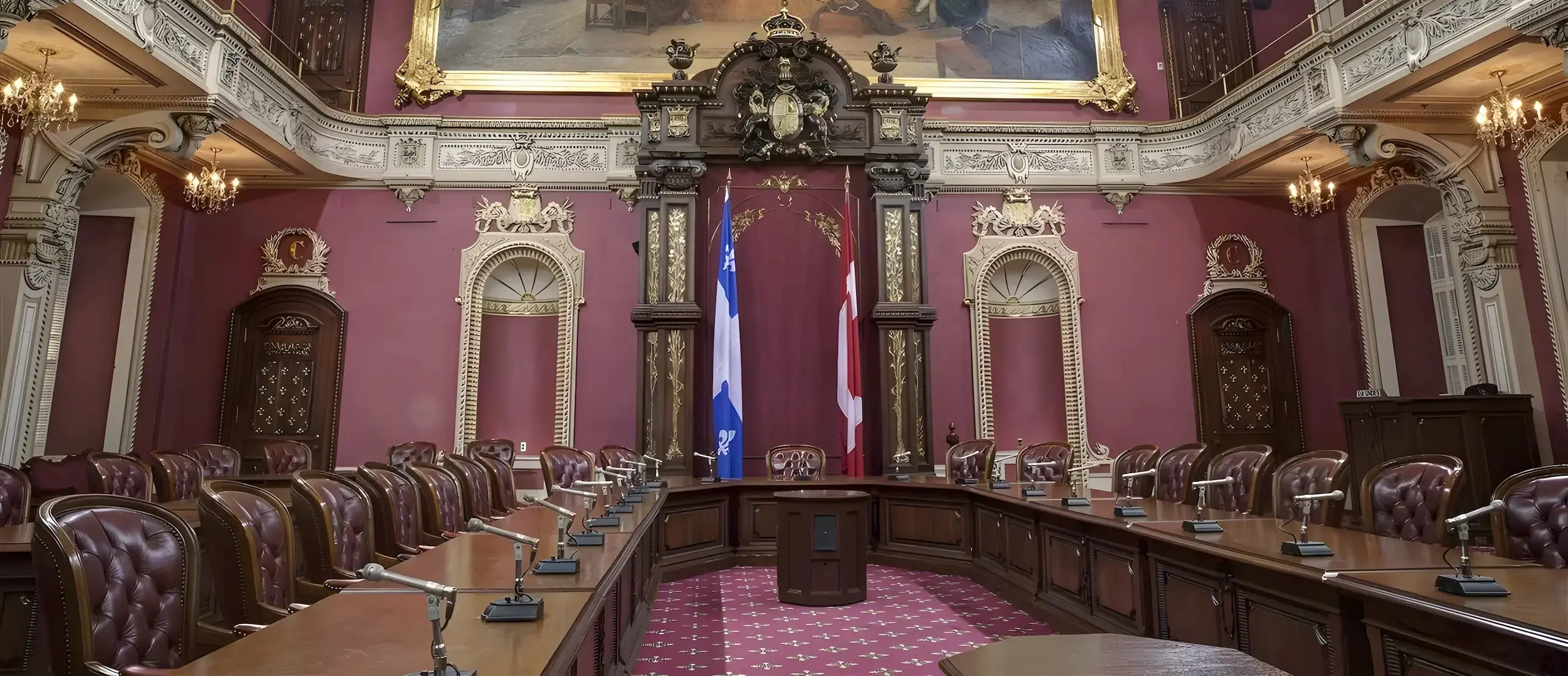
In Quebec, parliamentary committee consultations represent an optional step, though one with considerable democratic value, in the legislative process. After a bill is tabled, the government House leader (in effect, the master of parliamentary strategy and procedure for the party in power) has the option of sending the legislative text to one of the eleven committees operating at the National Assembly. These committees take the form of working groups made up of elected officials from each party (and sometimes even independent members), covering a defined area of government action.
Two of these committees are permanent: the Committee on the National Assembly governs everything related to the functioning of our house of the people, while the Committee on Public Administration has the essential mission of playing a verification and parliamentary oversight role over how public funds are spent by the government. The other nine committees are sectoral, and this is where things can become interesting for your organization.
You Are an Expert in Your Field
Regardless of the field in which your company or organization operates, there is a committee that, every parliamentary session, studies bills that can have a direct effect on the conduct of your activities and the achievement of your objectives, whether financial or political.
How many times have you thought that a government regulation did not reflect the reality on the ground? That a key piece of legislation in your sector deserved to be modernized? That reflection alone should convince you of the value of raising your hand to be heard during a parliamentary committee hearing on a bill for which your experience would be considered enlightening.
Engaging in this kind of knowledge-sharing and explanation, by making relevant content accessible to elected officials in a convincing and effective manner, helps raise awareness among parliamentarians and steers their work in the direction you favour. And ideally, it improves or enhances the content of the legislative text under study.
The opportunity to make your voice heard and demonstrate your expertise is still too often overlooked. The key is to be ready to do it well, by investing the necessary effort and being properly supported throughout the process.
You Have the Opportunity to Make a Difference
It is worth knowing that the legislative agenda does not make life particularly easy for groups wishing to be heard in parliamentary committee. Not only does it offer little predictability about when a bill of interest to them will be tabled (and consequently, when its public hearings will be held), but groups have no guarantee that they will be given an opportunity to appear before the parliamentarians. Fortunately, there are several ways to prepare for these eventualities.
First, maintaining solid strategic monitoring is often your best ally. Detecting upstream signals from political actors and the public administration about their intentions, anticipating both opportunities and potential risks for your organization, making informed decisions about how to proceed, adapting to change, and preserving your reputation are all reasons why you should always keep an eye on parliamentary news.
Next, it is important to update your requests or recommendations regarding the issues covered by an expected bill. You will often have little time between the tabling of the bill and the moment you are called before the committee. And that summons rarely comes with much advance notice! Once your interest in being heard has been confirmed within your organization, you should quickly signal it to the office of the minister responsible for the bill and/or the office of the government House leader, so that your name is included on the list of invited groups (negotiated among the parliamentary leaders of the various parties). This is the time to mobilize your contacts within the relevant ministry and the teams of the opposition critics concerned.
Finally, you must arrive at the hearings properly prepared. What justification has the government put forward to defend its bill? What is the opposition’s position? What is your reading of public opinion and the prevailing reaction in your sector? Most groups that appear submit a brief to the members of the committee in question. It should summarize the key points of your argument and explain your recommendations regarding the bill under study. Above all, expect to be questioned. An appearance before a parliamentary committee is one-third presentation and two-thirds answers to the questions posed by the participating elected officials. It goes without saying that being supported by a team of public affairs specialists can go a long way toward building your confidence. So, shall we meet at the legislature?